


Dokseodang gyehoedo (Gathering of Officials at Dokseodang Study)
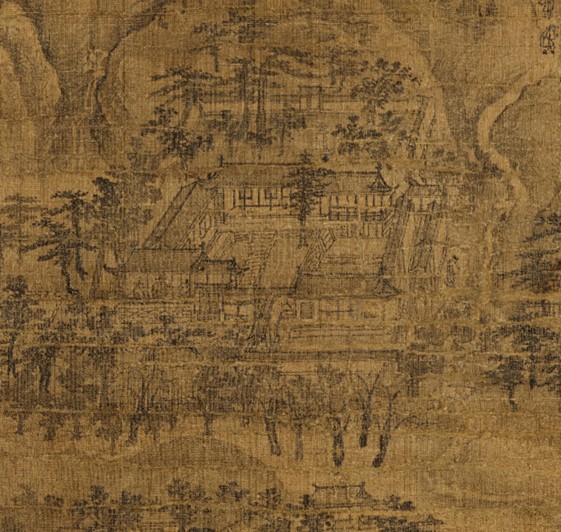
- Artifact Title
- Dokseodang gyehoedo (Gathering of Officials at Dokseodang Study)
- Date
- 1570
- Dimensions
- Overall 146.0x85.4cm Image 105.5x57.5cm
- Designation Type
- Treasure
- Designated Date
- October, 15, 1986
- Holder
- Seoul National University Museum
Overview
During the Joseon Dynasty, get-togethers at which officials could develop personal friendships were often held. These gatherings were called gyehoe in Korean. When such meetings were considered especially meaningful, it was customary for paintings of them to be produced and shared among participants. In the centuries before photography, such paintings played the role of commemorative photographs. In other words, paintings of officials’ gatherings were intended as a medium to help preserve the memory of them for a long time. This painting was created in commemoration of a gathering held in 1572 by nine officials who were endowed with reading leave at different times. Starting in the early Joseon period, brilliant young civil officials were endowed with leave to allow them to immerse themselves in reading and cultivate their talents. To operate this system of reading leave, the Dokseodang Study was built to allow civil officials to freely stay and concentrate on reading. Paintings depicting gatherings of officials at the Dokseodang Study are themed on gatherings among the officials staying at there, although the dates of their reading leaves differed. This painting on a hanging scroll presents a three-tiered composition with the title, image, and list of participants from top to bottom. An examination of the government posts of the officials listed on the painting indicates that it was created in 1572 (the 5th year of the reign of King Seonjo). More than half of the upper section of the image was left blank, probably with the intention of adding a poem. In the image, the Dokseodang Study is depicted on an exaggerated scale. A high-angle view is used to allow the viewing of the interior of the structure and its surroundings at a glance. The soaring mountain seen behind the Dokseodang is Eungbongsan Mountain, but it is portrayed in a rather exaggerated manner. In actuality, Eungbongsan would be located further to the left of the Dokseodang. However, since Eungbongsan is a notable nearby element, it is included by shortening the distance from the mountain. Along the ridge of hills to the right of the Dokseodang are a row of tile-roofed houses. This work that depicts the scenery surrounding the Dokseodang Study in a real-view landscape painting style demonstrates that the tradition of creating officials’ gathering paintings in this style was established during the first half of the sixteenth century.