


Dokseodang gyehoedo (Gathering of Officials at Dokseodang Study)
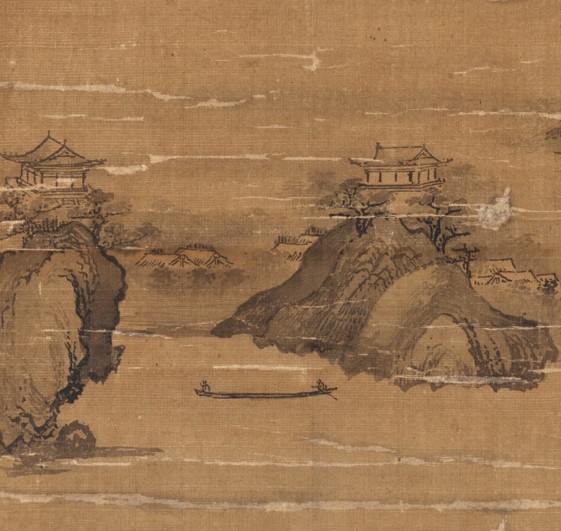
- Artifact Title
- Dokseodang gyehoedo (Gathering of Officials at Dokseodang Study)
- Date
- 1531
- Dimensions
- Overall 187.2×72.4cm Image 91.4×62.5cm
- Designation Type
- Treasure
- Designated Date
- April, 28, 2023
- Holder
- National Palace Museum of Korea
- Related Links
- Quick Link
Overview
During the Joseon Dynasty, get-togethers at which officials could develop personal friendships were often held. These gatherings were called gyehoe in Korean. When such meetings were considered especially meaningful, it was customary for paintings of them to be produced and shared among participants. In the centuries before photography, such paintings played the role of commemorative photographs. In other words, paintings of officials’ gatherings were intended as a medium to help preserve the memory of them for a long time. This officials’ gathering painting was produced to commemorate a gathering held in 1531 by officials who had been granted a leave to pursue personal reading. Starting in the early Joseon period, brilliant young civil officials were endowed with leave to allow them to immerse themselves in reading and cultivate their talents. To operate this system of reading leave, the Dokseodang Study was built to allow civil officials to freely stay and concentrate on reading. Paintings depicting gatherings of officials at the Dokseodang Study are themed on gatherings among the officials staying at there, although the dates of their reading leaves differed. This painting on a hanging scroll presents a three-tiered composition with the title, image, and list of participants from top to bottom. According to the list relating the personal data of the participants, they held a gathering in 1531 and had a painting depicting the gathering made in the same year. The image shows figures enjoying a boat ride together in the Hangang River, from which the Dokseodang Study is visible. The hill on which the study stands, the mountains behind it, and the section of the Hangang River near Dongho area are rendered accurately using a bird’s-eye view. The Dokseodang Study itself is not emphasized. This work excludes the idealized natural elements that often appear in landscape paintings from the first half of the sixteenth century. Instead, it presents real-view landscapes by setting the Hangang River and distant mountains horizontally, employing a bilaterally symmetrical composition, and applying a gradual and logical perspective. The use of a symmetrical composition instead of the asymmetrical composition typical of landscape paintings of the An Gyeon school popular at the time suggests an intention to reflect the horizontal viewpoint of a viewer actually seeing the river scenery. This work is significant as an early example of a real-view landscape among the surviving officials’ gathering paintings.